
June 2023 – “The Future Was Not Just Digital. It Had to Be Intelligent.”
As India was moving aggressively towards digitization of highways, tolling, compliance and logistics systems, one thing was becoming very clear to us at TruckSuvidha: technology alone was not enough. Systems also needed intelligence, trust and interoperability.
FASTag had already transformed toll collection across highways. Vehicles no longer need to stop for manual payments. Movement became faster, data became available in real time and transparency started improving. But while everyone was looking at FASTag as a toll collection system, we were looking at it from a much larger perspective.
What if highways themselves became intelligent?
What if trucks could move seamlessly across states without stopping repeatedly for permits, taxes, verification, or manual checks?
What if multiple transportation systems could communicate with each other digitally?
And what if logistics could become truly frictionless?
These thoughts started becoming stronger during mid 2023.
For years, transporters had suffered because of fragmented systems. Different states had different mechanisms. Entry taxes, permits, tolls, checkpoints, paperwork and manual verification created delays, inefficiencies and unnecessary operational burden.
Even after digitization started, systems were still disconnected.
One platform had toll data. Another had vehicle data. Another had permit records. Another had freight movement details. But there was no unified intelligence layer connecting everything together.
And this is where we started seeing the future.
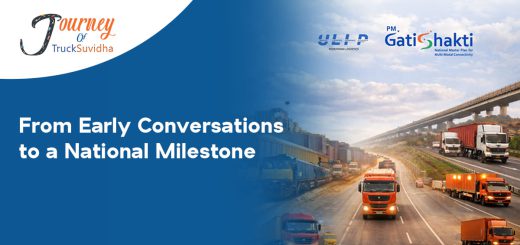
The conversations around National Logistics Policy, ULIP, FASTag ecosystem, intelligent transport systems and digital highways were now slowly shaping a completely new logistics landscape for India.
As startups working closely with transporters and truck drivers on the ground, we could clearly see both the opportunities and the gaps.
We started brainstorming deeply around:
- How digital identity for vehicles could evolve
- How trust layers could be created in transportation
- How verification systems could reduce fraud
- How FASTag infrastructure could become more than just toll collection
- How movement data could improve logistics planning
- How transportation systems could become predictive instead of reactive
One major realization during this phase was:
India was no longer just building roads. India was building digital mobility infrastructure.
And whenever infrastructure changes, startups get opportunities to innovate.
We started understanding how technology can help vehicles move without unnecessary stoppages. How tolls, taxes, permits and compliance systems can eventually become automated. How logistics data can help optimize freight movement. How intelligent systems can reduce operational leakages.
At that stage, many of these ideas were still early thoughts. Execution was not easy. Ecosystem readiness was still evolving. Policies were changing. Government systems were getting digitized gradually.
But this is how startup journeys work.
Sometimes the biggest value comes not from what is already visible in the market, but from identifying where the market is heading before everyone else notices it.
During this period, we spent a lot of time thinking, observing and connecting dots instead of simply chasing short term business numbers.
Because one thing was becoming clear:
The future of logistics would not be driven only by trucks and freight.
It would be driven by data, digital infrastructure, interoperability and trust.
At the same time, we realized another important lesson for startups.
Whenever industries move from offline to digital, fraud and loopholes also evolve alongside innovation. The same happened in logistics and FASTag ecosystems as well. While digitization solved many operational problems, it also created new misuse patterns.
This reinforced our belief that:
Digital Needs Discipline. Technology Needs Accountability.
And that is where the next phase of innovation for logistics startups would emerge.
June 2023 was not about massive announcements or viral milestones for us.
It was about thinking ahead.
It was about understanding where transportation, highways and logistics were heading in the next decade.
And most importantly, it was about preparing ourselves to build for that future.
Because in startups, survival is important.
But staying relevant with changing ecosystems is even more important.
Also Read: Reimagining Movement: When Logistics Started Thinking Beyond Toll Plazas
Recent Comments