
August 2023 – Back on the Highways, This Time With a Digital Compass
There are moments in every startup journey when you feel the need to go back to where it all started.
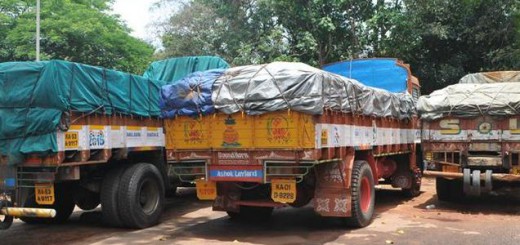
For TruckSuvidha, that place was never a boardroom, a conference hall, or an office cabin. It was the highways of India. It was the transport nagars, loading points, warehouses, roadside dhabas, truck parking yards, and countless conversations with transporters and truck drivers who kept the country’s economy moving.
Years ago, before TruckSuvidha was born, we travelled across states trying to understand one simple question:
Why is logistics so difficult despite being one of the most critical industries in the country?
Those journeys gave us answers that no report, presentation, or market research study could have provided. They helped us understand the real problems of transporters, brokers, fleet owners, industries, and drivers.
In August 2023, we found ourselves returning to those roads once again.
But this time the purpose was different.
Earlier, we were trying to discover problems.
Now, we were trying to validate solutions.
The Industry Was Changing
The logistics ecosystem had evolved significantly over the previous few years.
FASTag had transformed toll collection across highways.
Digital payments had become mainstream.
The National Logistics Policy had been launched.
ULIP and various digital initiatives were creating the foundation for a connected logistics ecosystem.
Discussions around intelligent transportation systems, real-time visibility, digital compliance, and integrated logistics networks were becoming increasingly common.
The industry was moving towards digitization faster than ever before.
However, one important question remained:
Was the transformation happening equally on the ground?
The answer could not be found sitting behind dashboards.
It had to be understood directly from the people operating trucks, managing fleets, coordinating loads, and running transportation businesses every day.
From Scattered Conversations to Connected Systems
During our early years, most conversations revolved around individual problems.
A transporter wanted loads.
A shipper wanted trucks.
A fleet owner wanted better utilization.
A driver wanted faster payments.
A broker wanted more visibility.
Everyone was solving their own challenge.
But by 2023, we had started seeing the industry differently.
The challenge was not the individual problems.
The challenge was the lack of connection between all these stakeholders.
Every participant was operating in isolation.
Data was fragmented.
Communication was fragmented.
Documentation was fragmented.
Decision-making was fragmented.
And whenever information becomes fragmented, inefficiency follows.
As we travelled and interacted with stakeholders once again, we started looking at logistics through a larger lens.
What if all these disconnected pieces could be connected through technology?
What if transporters, drivers, industries, compliance systems, tolling systems, and operational workflows could become part of a single digital ecosystem?
The conversations had changed.
The vision had become bigger.
Asking Better Questions
One noticeable difference during these visits was the nature of discussions.
Earlier, we used to ask:
“What problems are you facing?”
Now, we were asking:
“What would happen if all your trips were digitally tracked?”
“What if payments, documentation, compliance, and operations were available through a single workflow?”
“What if vehicle information could move seamlessly across systems?”
“What if transporters could spend less time on paperwork and more time on business?”
The objective was no longer limited to solving one problem.
The objective was understanding how multiple systems could work together.
This shift in thinking was important.
Because real transformation does not happen by digitizing one process.
It happens when entire ecosystems become connected.
Organising Chaos Through Technology
One common observation remained unchanged.
Despite all the technological progress, many critical logistics processes were still heavily dependent on phone calls, registers, spreadsheets, handwritten notes, and fragmented communication channels.
A significant amount of operational knowledge existed only in people’s heads.
A large portion of decision-making still relied on experience rather than structured information.
While technology adoption was increasing, there was still enormous scope for bringing more discipline, visibility, and predictability into the system.
This aligned closely with what we had been discussing internally over the previous months.
The future of logistics was not just about apps.
It was about intelligent systems.
Systems that could reduce friction.
Systems that could improve trust.
Systems that could help stakeholders make better decisions.
Systems that could learn from data and create operational efficiency at scale.
Why Ground Reality Still Matters
One of the biggest lessons from this phase was that technology should never create distance between companies and the people they serve.
As startups grow, there is always a risk of becoming too dependent on dashboards, reports, metrics, and analytics.
Data is powerful.
But data alone never tells the complete story.
A dashboard can show a trend.
A transporter can explain why that trend exists.
A report can identify a problem.
A truck driver can explain how that problem affects daily life.
A spreadsheet can show numbers.
Ground conversations reveal realities.
That is why these visits remained important.
Because no matter how digital logistics becomes, it will always be powered by people.
Also Read:- July 2023 – “When Stability Returns, Real Building Begins”
Startup Lessons from August 2023
August was not a month of major launches or headline-making announcements.
But it became an important month of learning.
A few lessons stood out clearly:
- The bigger the organization becomes, the more important it is to stay connected with the ground.
- Technology succeeds only when it solves real operational problems.
- Logistics is not a collection of independent activities; it is an interconnected ecosystem.
- Innovation starts with listening before building.
- Growth without understanding creates gaps; understanding creates sustainable growth.
Most importantly, we were reminded of something that had inspired TruckSuvidha from day one.
India’s logistics industry does not need technology for the sake of technology.
It needs practical, scalable, trustworthy solutions that simplify life for the people who keep the nation’s supply chains moving.
And sometimes, to build the future, you have to go back to the highways where the journey first began.


Recent Comments